


Last Friday I gave a remote keynote to NASA administrators from a hotel room. I was in San Diego, the audience was together in Virginia, and we spent 2 hours building up their skill of humor thanks to a Teams effort (Get it? Microsoft Teams… anyway.)
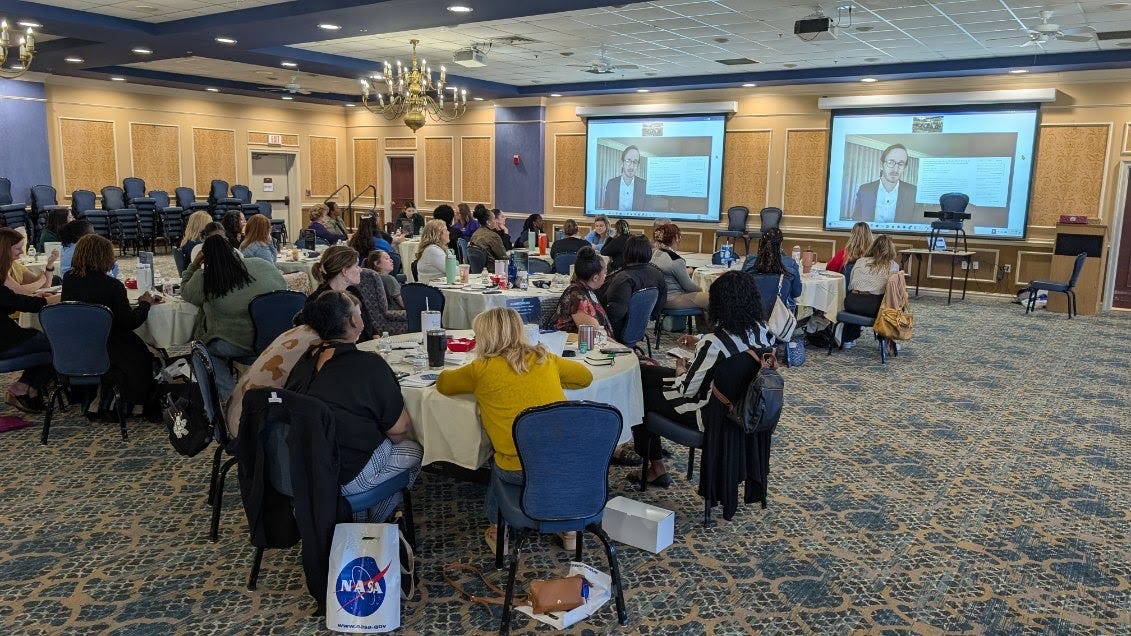
After each joke I sat in silence longer than felt natural because there’s a delay on virtual calls. Two, sometimes three seconds between the punchline and the laughter coming back through your speakers.
If you cut yourself off early to fill the silence, you train the audience to stay quiet. If you wait too long, the audience thinks you froze (literally or figuratively).
So you sit there. Smiling. Not flinching. Trusting it’s coming.
The only reason I knew how long to wait was from practice and repetition. Not because of natural talent, a perfect script, or counting 2 seconds after each joke (“one one thousand, two one thousand” or for the Brits, “one Piccadilly, two Piccadilly”).
It was because of reps. Close to two decades of them, on stages big and small, live and remote, some that went great and plenty that went sideways. They all taught me something I couldn’t learn by reading about humor, watching it, or thinking about it. I had to do it. Repeatedly, often poorly, in front of other humans.
Stage time is the ultimate skill-builder
If you want to get funnier, you have to get on “stage.”
The data backs this up. The lowest-scoring question on the Humor Intelligence Assessment is “I regularly take time to work on funny ideas.” About 57% of people score themselves as rarely or never.
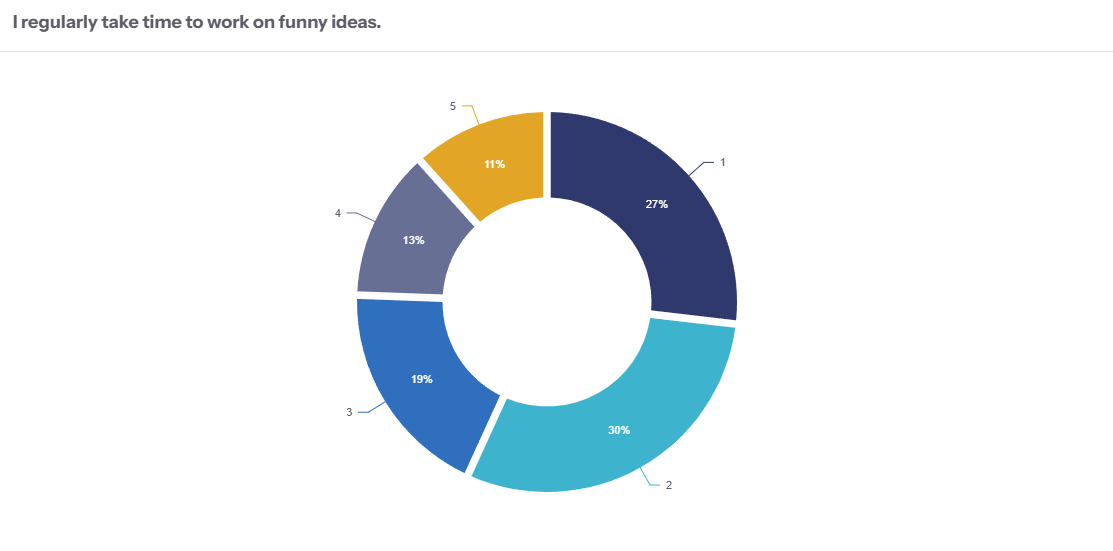
The same group scores high on noticing funny moments. So this isn’t about whether you find life funny (you probably do). This is about whether you ever take that noticing and put it through reps.
That’s the primary difference between those who are funny and those who aren’t. It’s not a personality trait, innate talent, or a “vibe.” It’s stage time.
You can’t read your way to funnier. You have to try a line out loud. You have to watch it not land. You have to adjust and try again (and again (and again)).
Side note: this is why I think humor is becoming even more important in a world of AI. Currently AI is pretty terrible at writing humor, but even when it gets better, you’ll still need the skill to know how to deliver it. You get that through reps.
What stage time actually looks like
Now, most people hear “reps” and assume it means a comedy club, improv class, or turning your daily stand-ups into daily stand-up. Those all count, but they’re not required. As Shakespeare said, “All the world’s a stage.”
If you want to improve your skill of humor, you have to get “stage” time. But that can come in many forms:
The named stages
Improv class. The single best investment you can make in this skill. Low-stakes, group setting, and you stop thinking in your own head after twenty minutes.
Toastmasters. Builds the foundation of being comfortable on your feet without notes.
Open mic. The most uncomfortable, the most effective. Five minutes in front of nine strangers will teach you more about timing than ten books.
Skill of Humor Live Lab. A combination of all of the above in a safe space where you can try new things and get expert coaching on what works and what doesn’t.
The stages you already have access to
The next meeting where you choose the funnier opener over the safe one. You don’t have to commit to a bit. You just have to risk one line.
The Slack message you almost deleted because the joke might not land. Send it and see what happens. (You can recover from a flop. You can’t recover from never trying.)
The 1:1 where you say the more candid version of what you actually think. That also counts.
The stages you didn’t know were stages
The networking event where you introduce yourself in different ways to see what gets people to laugh.
The bedtime story you read with different voices.
The dad joke at the dinner table, even when it bombs (okay, especially when it bombs).
Life is the stage and you’re already on it. The question is whether you’re practicing or just standing there.
My next stage is virtual
Next Thursday, May 28, I’m doing a stand-up comedy set in VR! That’s right, an avatar with this nasally voice is doing a live comedy show in VRChat.
So come join us. It’s free. You can watch from your laptop or phone (no headset required).
Date: Thursday, May 28
Time: 9pm EDT, 6pm PDT
Link: Find Details and Learn How to Join Here
It’s another rep, whether it goes well or it bytes (Get it? It’s VR so like computer byte… anyway).
Wit regards,
Andrew
P.S. If you want to know which humor competency would benefit most from your next round of reps, the Humor Intelligence Assessment will tell you. Five minutes, eight competencies, surprisingly specific results.