

I thought I was Sherlock on the 4 train
The man in the immaculate suit was not, in fact, a construction worker

New around here? You’re getting this because you opted in at a recent event or after taking the Humor Intelligence Assessment. Every Friday I send one short piece about humor as a professional skill you can actually build.
This one picks up a thread I started three weeks ago, so if you’d rather have the beginning, start here. And if it turns out this isn’t for you, the unsubscribe link at the bottom works perfectly. My brother tested it (he claims it was on accident...)
A reader named Karen hit reply to last week’s post and opened with this.
“Today, I’m actually hitting reply rather than just answering your questions, vaguely, in my own head.”
She told me there’s one friend she feels like a comic genius around, and with everyone else it’s fifty-fifty. Then she asked what workout she could design to get better at that. She signed off with best wishes to Pretzel (my wife) and Pineapple (my daughter), and added “see, I do read your stuff.”
Thanks for the thoughtful email, Karen (Pretzel always appreciates a shout out).
There are two things that stand out to me about what she wrote.
1. The power of appreciation
The first thing that stood out was that she has one friend she feels like a genius around. I’d venture to say the reason that’s true has less to do with Karen’s comedic skill and more to do with the friend’s level of Appreciation and Empowerment (two of the 8 humor competencies).
When you’re generous with your laughter and encouragement, people are far more likely to use humor around you. That means they get better and you get more joy.
2. Working out humor
The second thing that stood out is the desire for a workout.
For three weeks I’ve handed you the same rep in different variations. Notice the funny thing. Write it down. Add a sentence on why it worked. No need to tell it to anyone, it’s just for your own enjoyment.
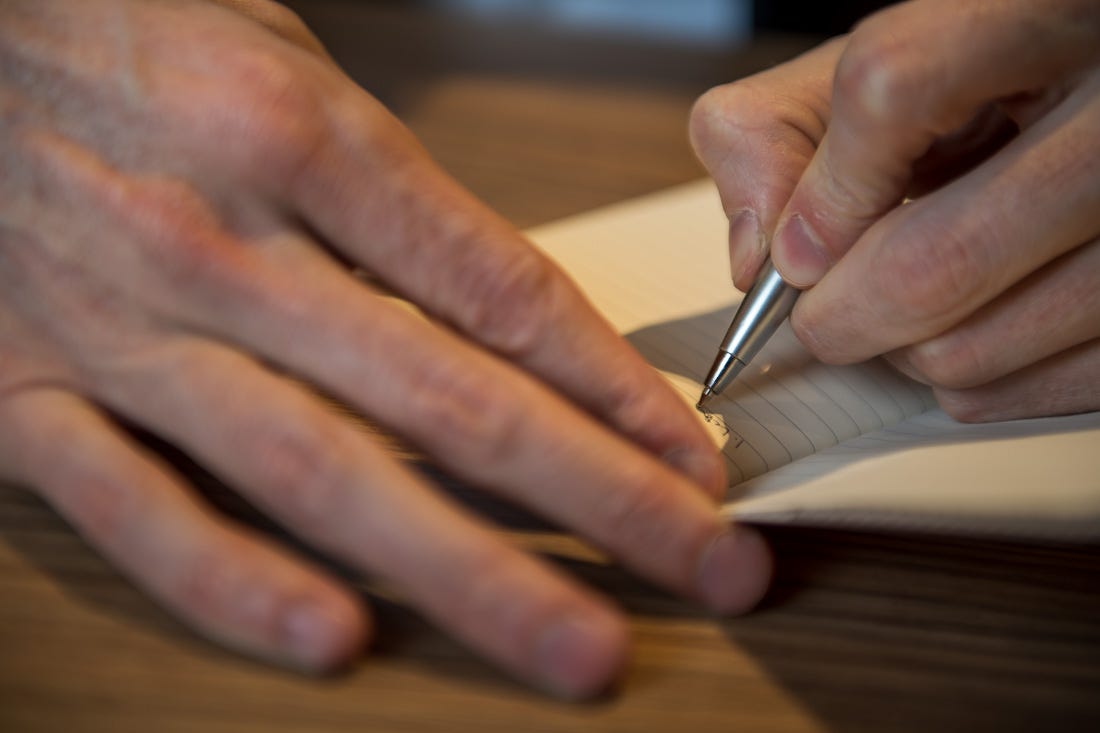
I chose that rep because it’s the easiest place to start… because it’s the only one you can do alone.
Then the replies came in.
Dave, a funeral director, wrote about knowing exactly when he can break the tension in a room and when he shouldn’t try. He also mentioned that in other settings he’s made jokes he should have thought twice about first.
Judi wrote on her way to her first World Cup match, saying funny doesn’t automatically pop into her head (sarcastic, maybe) and that she sometimes shares with the incorrect audience.
Pretzel replied saying, “I think the way you run is cute. Also can you pick up some milk later?”
None of them learned that from a notebook.
Dave knows the temperature of a funeral home because he has stood in hundreds of them, beside people on the worst day of their lives, and occasionally said the wrong thing anyway. Judi knows about the incorrect audience because she found one. Pretzel learned about the milk from the fridge.
All of that education happened out loud, in front of somebody, with a result they got to experience live.
Karen has been practicing in her head. Three weeks of excellent notes, and no idea whether any of it works.
The skill with no scoreboard
Most skills grade themselves.
Play the wrong chord and the piano tells you before you’ve finished hearing it. Shoot a basketball and it goes in or doesn’t. Cook dinner and you can taste it.
The “scoring” is built into the activity, which is why you can practice alone in an empty room for a year and walk out better than you went in.
Humor has no such mechanism. Whether something is funny isn’t a property of the thing you said. It’s a reaction that happens inside somebody else, and you have no access to it until you put the thing into the air and watch what their face does.
Your notebook can’t grade you. It holds your material and tells you nothing.
Noticing is absolutely the first step to improving your humor. It’s also where almost everyone stalls. It’s the only rep with no witnesses, which makes it the only rep that costs nothing. You can do it for thirty years and never once find out.
It reminds me of how I felt when the BBC show Sherlock came out. I absolutely loved it and soon became convinced that I, too, was a master of deduction.

I’d sit on the subway and come up with elaborate stories about people based on the smallest of details.
“Judging from the dirt on that man’s shoe, he must work in construction. Given the color of the dirt, it’s likely a job in the Bronx.”
I would assume I was right without ever trying to confirm. Never mind that we were on the 4 train leaving the financial district and this man was in an immaculate suit.
Everything past noticing needs a second person. Saying the thing. Timing. Reading the room. You cannot get better at “reading a room” in your own head, because the room is the feedback.
Your rep this week
If you really want to build your skill of humor, take one thing out of your notes and say it out loud. To one person. Once.
It doesn’t have to be an entire bit, elaborate story, or theatrical performance. One line, one human. Your family counts. The barista counts. The coworker who asks “any updates?” at every single standup absolutely counts.
It might land. It might earn the polite nod Pretzel has perfected over the course of our marriage. Either way, you will know something by Friday that no amount of writing it down would have told you.
Karen asked what workout she could design for this. She can’t design it alone, and neither can you, which is why I’ve spent the last few months building the thing I’d want to hand her. I’ll tell you about it next week.
Until then, say the thing. Then hit reply and tell me what happened. What you said, who you said it to, and what their face did.
I read every response. I’d love for a few of them to come from people who have never sent one.
Wit regards,
-Andrew
P.S. Faith wrote in to say humor is a muscle that needs to be exercised. She’s right. I’d only add that it’s a muscle you can’t work without a spotter.