

What 27 people taught me about humor (while I was on the couch)
The importance of iterating and what I learned about the Humor Intelligence Report.

Last week, I disappeared. Pineapple (my daughter) got sick, then I got sick, and my mom (who flew in for a fun grandma visit) spent the week playing nurse to both of us instead.

We’re all fine now. I’m back at about 90%, which is plenty enough to write to you with a bit of silver lining:
That extra timing ended up being a gift.
Because while I was parked on the couch watching the 387th consecutive episode of Bluey with Pineapple, I had something I rarely get: a bit of time to sit with everything we learned from the Humor Intelligence First Look session on February 13th.
And we learned a lot.
What 27 People Taught Me About Humor Intelligence
Twenty-seven people showed up to the beta session (thank you to those who did).
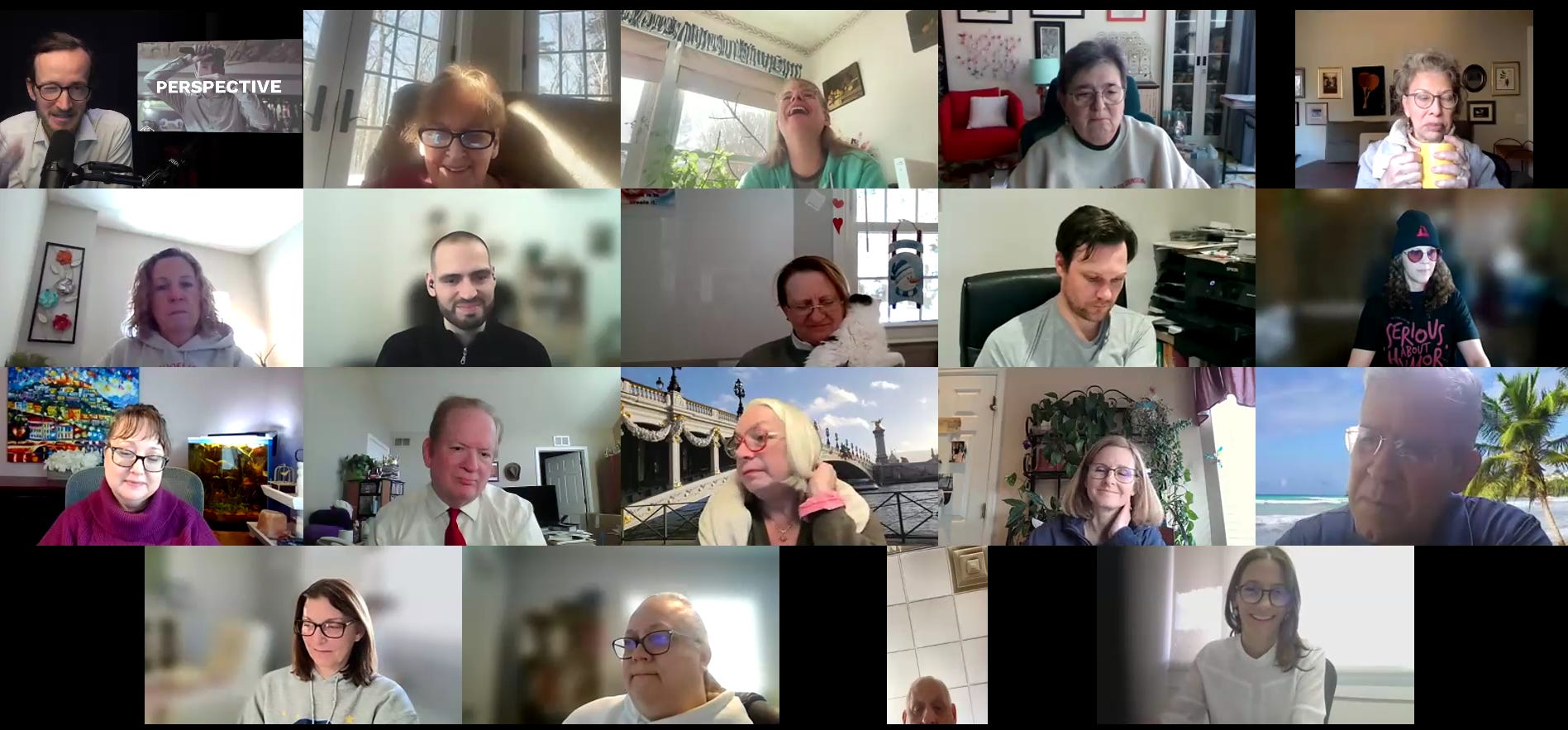
Afterward, I sent a follow-up survey. The average recommendation score came back at 9.86 out of 10. Every single respondent said they’d recommend it to a colleague.
That’s a perfect Net Promoter Score. I don’t say that to brag (there’s obviously some bias from people in this community), I say it because it told me the assessment isn’t just interesting. It’s useful. And that’s my primary goal.
But the number that really stopped me was that 25 out of 27 participants (93%) rated the assessment’s accuracy at 8 out of 10 or higher.
And the 2 people who rated it lower said it was because they weren’t sure what context to answer the questions in (work, with friends, etc). That’s something we can fix with better instructions at the beginning of the assessment.
Overall, it’s great confirmation that we’re not measuring whether you can deliver a punchline. We’re measuring eight distinct competencies, things like how you read a room, how you use humor to connect with people, and whether you’re better at appreciating humor or creating it.
That last one turned out to be the big discovery.
The Aha Moment Nobody Expected
Over and over, people said some version of: “I didn’t expect THAT to be my strongest area.”
But the most common breakthrough was something specific. One beta tester put it perfectly: “It made me realize there was a difference between the appreciation and creation of humor. I never considered that before, but it explains a lot about me.”
She’s not alone. Most of us walk around with a vague sense of whether we’re “funny” or “not funny.” That binary is completely useless (unlike binary code which is very useful for us engineers).
You might be brilliant at appreciating humor (recognizing what’s funny and seeking it out) but freeze when you try to create something funny on the spot.
Those are different skills. Both learnable, both useful, but different. And once you see that distinction, you stop trying to be something you’re not and start building on what you already have.
Several people actually compared the assessment to tools like StrengthsFinder and DISC, but said this felt more actionable, which is amazing. One tester called it “better than personality tests... it’s a tool for connecting with others.”
That’s exactly what we’re going for.
What Comedians Already Know
This process of trial-and-feedback is exactly what comedians do every night on stage.
You write a joke. You test it at an open mic on a Tuesday night in front of twelve people. You watch what happens. You adjust the wording, the timing, the setup. You test it again. You cut what doesn’t work. You keep what does. A joke that kills after six months of refinement barely resembles the version that got polite silence in month one.
And that’s what we’re doing with the Humor Intelligence Assessment.
Beta testers told us some of the questions needed clearer wording. So we’re rewriting those questions. They told us the 40-page report had some repetitive sections. So we’re tightening it. They said the spider chart that visualizes your eight competencies was one of the most valuable parts (one person said it “put structure around a jumble of assumptions and untangled them”). So we’re highlighting it.
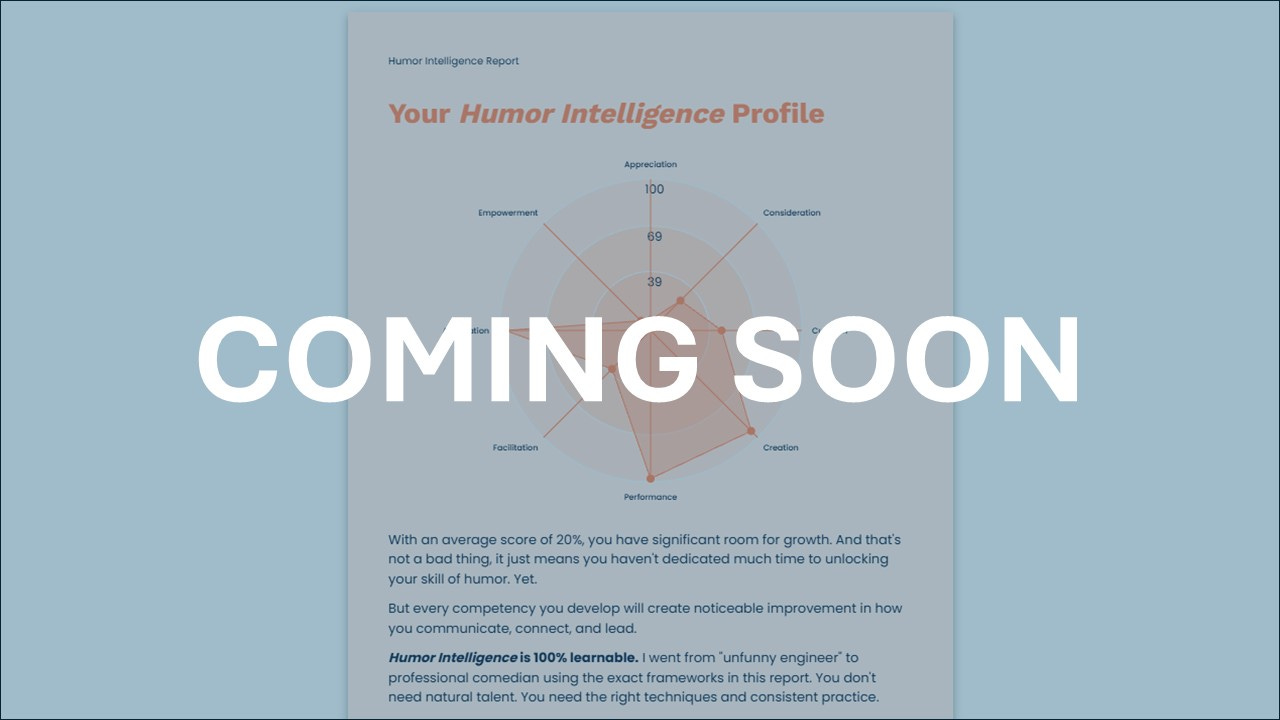
That’s what a rigorous, research-backed development process looks like. Create, share, get feedback, improve. And it happens to be the same skill set we want everyone to develop with their own humor.
Not “be funnier.” But notice what lands. Adjust what doesn’t. Try again.
What’s Coming Next
The full Humor Intelligence Report is coming in a couple of weeks.
It’s sharper, clearer, and more useful than what we would have shipped a week ago. The beta made it better. The feedback made it stronger. The forced time on the couch, apparently, also made it wiser.
In the meantime, if you haven't taken the free assessment yet, you can do that right now at insights.humorthatworks.com/assessment.
It takes about five minutes and you’ll get some instant insight today and be the first to know when the complete report launches in two weeks.
Now, does anyone know how to get the Bluey theme song out of your head?
Wit regards, Andrew
P.S. I’ll be the Director of International Humor Month for AATH once again. Be on the lookout for more details soon about all the ways you can level up your humor game in April.