

What stand-up actually teaches you (it's not jokes)
Pacing, observation, confidence. The skills your job actually needs.

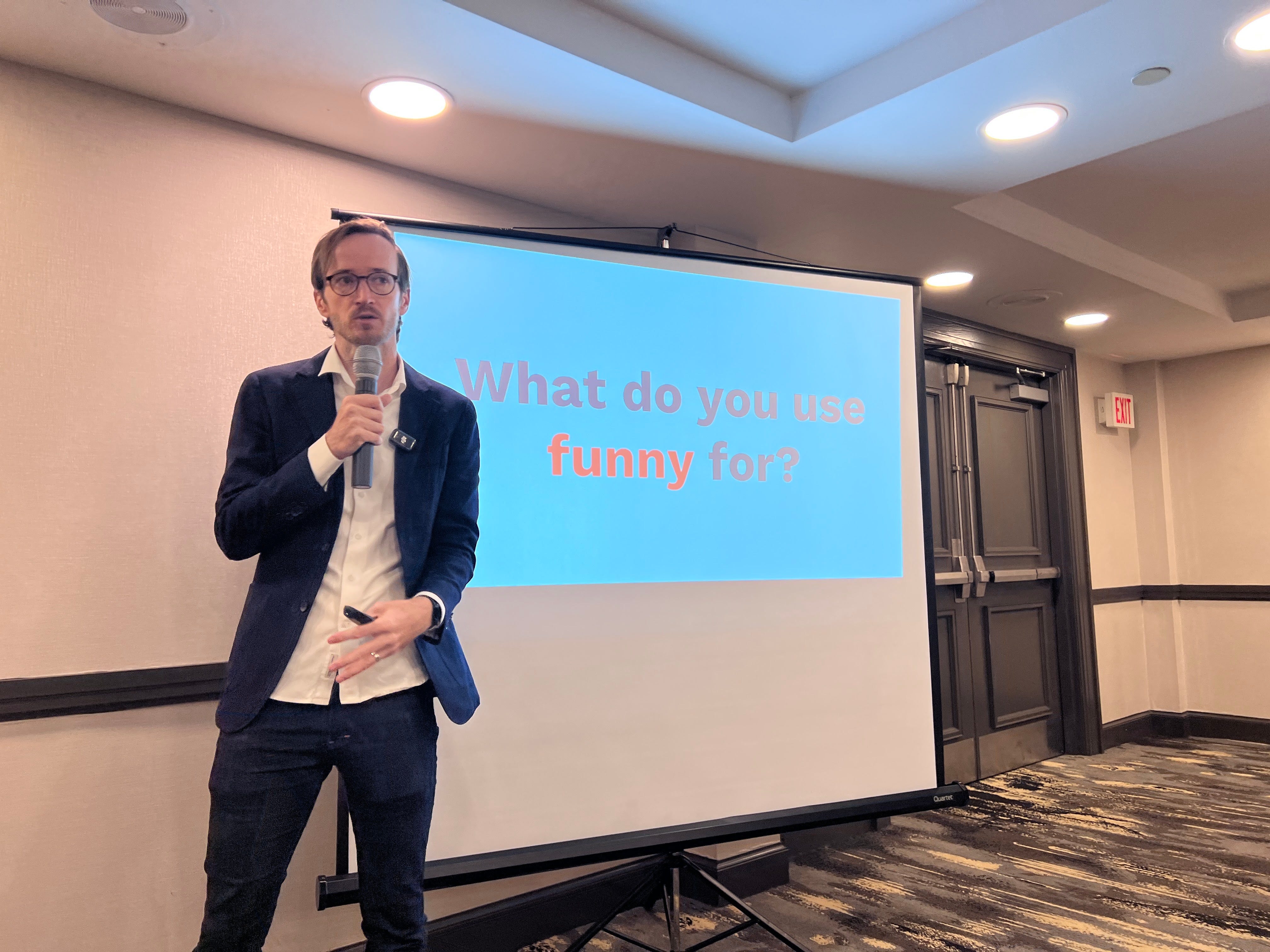
A philosophy PhD told me she learned more in my two-hour workshop than in a full semester of her master’s program. Which surprised me, considering my workshop was on humor.
Her name is Emily. She attended my session last month at NSA Carolinas. A few weeks later she wrote me a LinkedIn recommendation, most of it the kind of generous you’d expect when someone wants to be supportive. But one line in particular stood out.
“I learned more from him in two hours than I did in a full semester of grad school. I’m not exaggerating. I wish I were.”
I should clarify the kind of grad school we’re talking about. Emily has both a master’s and a PhD in philosophy. The discipline built on careful argument, clear thinking, and noticing what people actually mean by what they say.
So either Emily had a strange semester... or something about studying humor is doing more than people realize.
How I became a better presenter
About a year into my career at P&G, I had my weekly check-in with my manager when he asked if I’d been taking a presentation skills class.
I said no, a bit surprised at the question.
He asked if I’d joined Toastmasters or hired a coach. Same answer. I asked why.
He told me my presentations had gotten noticeably stronger over the past few months and asked what I was working on.
It took me a moment to realize the only “practice” I had been doing was stand-up.
I’d been hitting up open mics a couple of times per month, working on material that mostly didn’t work. I wasn’t trying to become a better presenter. I was trying to become funnier.
But it turns out that my general presentation skills were improving and my manager spotted the change before I did.
That’s the same shape as Emily’s experience. She didn’t sign up for a humor session to sharpen her thinking. I didn’t take stand-up to become a better speaker. We both got something we weren’t expecting.
Which is the thing I keep coming back to.
The Skill of Humor isn’t a separate set of capabilities sitting next to your professional skills. It’s a wrapper around them. Pacing is pacing. Observation is observation. Confidence is confidence.
Humor just happens to be the most concrete way to practice them, because every attempt gets immediate feedback. Laughter or silence.
You can fake your way through a status update for years. People will nod politely or stare at your slide deck. You can’t fake your way through an open mic. The awkwardness when it’s not going well is visceral.
Comedian as Observer
I’m not the only one who has noticed this. Diana Kander told a story on LinkedIn that makes the same point harder than I could.
Diana is a working speaker. Sharp on stage, comfortable with audiences. She wanted to add a few jokes to her keynote, so she hired a stand-up comedian to write some.
The comedian sat through her entire performance, taking notes the whole time.
When Diana finished, she asked what the comedian had written.
It turns out the comedian hadn’t written any jokes, only observations like Diana was bad at breathing and had what she called “googly eyes” on stage.
This happens a lot when I’m working one-on-one with speakers. Years of speaking coaches and self-tape reviews might not surface an issue. But someone trained in comedy can see it right away. Why? Because comedians spend their professional lives noticing what other people miss. The same attention that finds the funny finds everything else too.
The same logic applies, even if you don’t speak professionally. Joke writing is intense training for written communication. Improv exercises are repetitions in active listening. Humor notebooks are the starting point for self-awareness.
Two ways to learn the same thing
You could take a presentation skills class. Grind through your filler words under fluorescent lighting, work through a packet of exercises, leave with three things to fix. It’s a worthy effort and it works for some people.
Or you could take an improv class. Laugh your way into the same skills, with people you’ll actually want to see again next Tuesday.
Both can make you stronger, but one of them is significantly more fun.
The point isn’t that humor is the easy path. It’s the path that doesn’t get abandoned, which means it’s the one that actually compounds.
What’s your take? Have you found any transferable skills from what you’ve learned about humor? Hit reply and let me know. I read everything.
Wit regards,
Andrew
P.S. Emily, if you’re reading this, thank you for the kind words and the puzzle. (And thank you for not actually quitting philosophy. We need clear thinkers in there.)
Yes. Sounds like I need to find some opportunities. Thank you!
This is helpful, I'm working on writing a humorous article - that's how I found you. I wrote an article on humor for business leaders, inserting jokes and a couple of quotes I attributed to you. I researched, studied and worked hard on the article...feedback? Silence. I need to rewrite it. Any advice on writing humor, or is improv still the best for that too? (I led a youth group in Improv for 5 years, while I have not taken a class, I have coached youth!). ~ Loralee Erickson