

You're probably funnier than you think
Just not in the way you'd expect

The first time I ever gave a talk on humor at work, I spent an hour teaching people how to be funny. At the end, the biggest takeaway had nothing to do with being able to make people laugh.
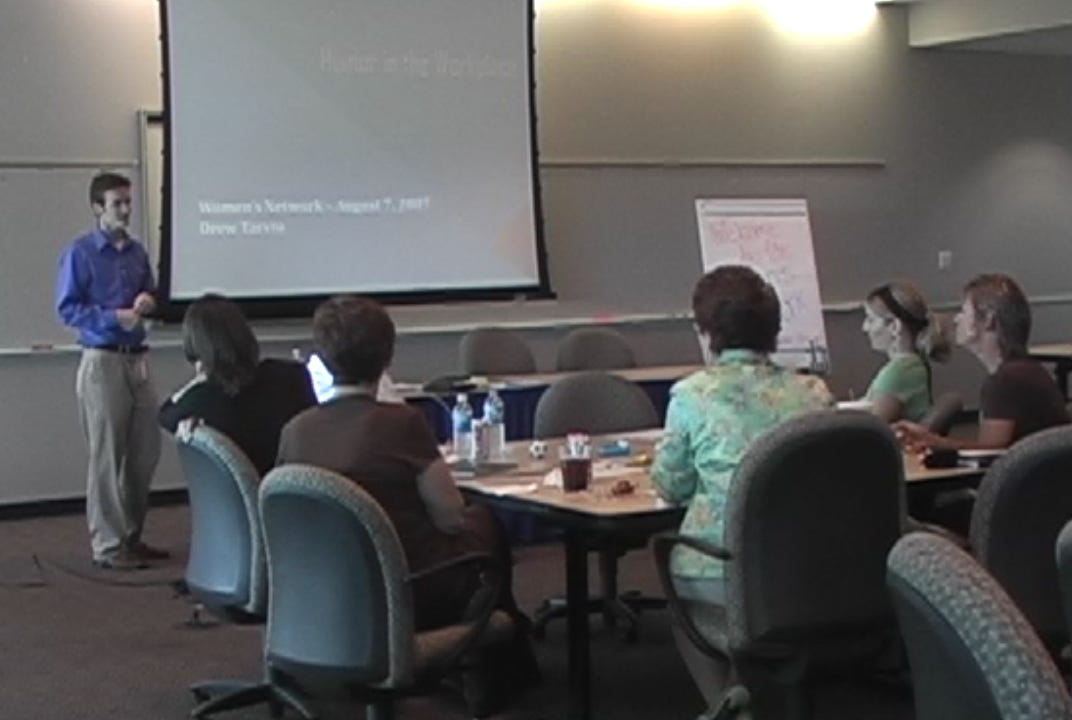
I was still working at Procter & Gamble at the time. A women’s leadership group had asked me to do a 60-minute session on humor in the workplace, and I did what I thought was the logical thing to do. I spent most of that talking about comedy.
Techniques, structures, ways to craft something clever. I had one slide on the benefits of using humor and mentioned (almost as an afterthought) the value of simply laughing more as a way to relieve stress.
At the end of the session, I asked the group what they were going to take away. One woman raised her hand and said, “I’m just going to try to laugh more.”
And everyone agreed.
She wasn’t interested in writing better jokes. She didn’t need to become the funniest person in her department. She realized she could just start seeking humor out.
I didn’t have language for it then. But what she was describing is something I now call Humor Appreciation, and it turns out it’s one of the most overlooked (and undervalued) humor skills there is.
You’ve been measuring yourself against the wrong skill
Most people think “using humor” means “being funny.” And not just “funny” but stand-up comedy level funny. It doesn’t.
It turns out that there are 8 different competencies hiding inside that phrase.
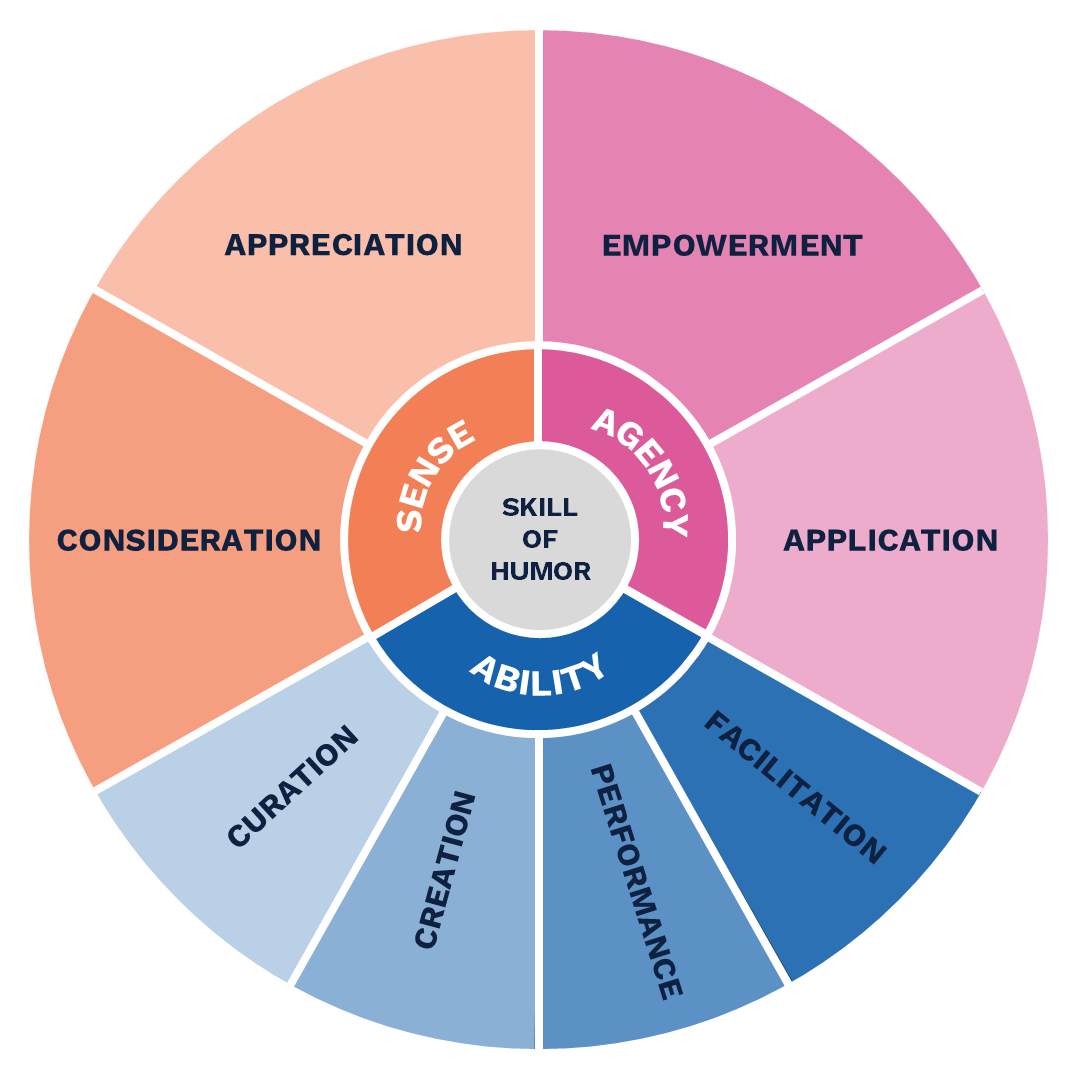
Humor Creation and Performance (2 of the 8) are what most people picture. It’s coming up with something clever on the spot and delivering it in a way that has people ROFLing so hard they give you an instant promotion.
Humor Appreciation is the other side. It’s recognizing what’s funny around you, responding to it, seeking it out, and letting yourself actually enjoy it.
Most professionals are stronger in Appreciation than Creation. And they’ve spent years beating themselves up thinking they’re “not funny” when they’re actually quite skilled in a humor competency they didn’t know existed.
When I started testing the Humor Intelligence Assessment earlier this year, the data confirmed this. 56% of people who took it had Creation as their lowest competency. More than half.
One person put it perfectly after getting their results. “I’m not a good creator, but I have other skills that are equally as valuable, if not more.”
The distinction isn’t small. It’s the difference between thinking humor isn’t for you and realizing you’ve had it all along.
The woman at that P&G session didn’t need to become a comedian. She just needed to start seeing funny instead of pressuring herself to be funny.
Discover Your Skill of Humor
If you’re curious where you actually stand, the Humor Intelligence Assessment breaks humor down into 8 competencies (Appreciation and Creation are just two of them) and shows you your profile across all of them. It takes about 5 minutes.
If you already took it this week, I’d love to hear what surprised you. Hit reply and tell me.
Wit regards,
-Andrew
P.S. If you caught Wednesday’s email, now you know the insight behind why I built the assessment in the first place. If you missed it, the short version is this. 5 minutes, 8 competencies, a profile of yourself you haven’t seen before.
P.P.S. 56% of people scored lowest in Creation. If that ends up being you too, congratulations. You have 7 other competencies that say you’re funnier than you thought.
Love this post, I am following your contact from long time, love your work.
My brother & his son, my nephew, are very funny. They'll say something funny, then say something funnier about the funny thing they just said. Like you, Andrew.
I love to be around them, it's so much fun.
Sometimes I'm able to say funny things spontaneously at the moment that makes someone laugh, but not as a regular part of my personality. Yeah, your're right, I just need to lighten up.